
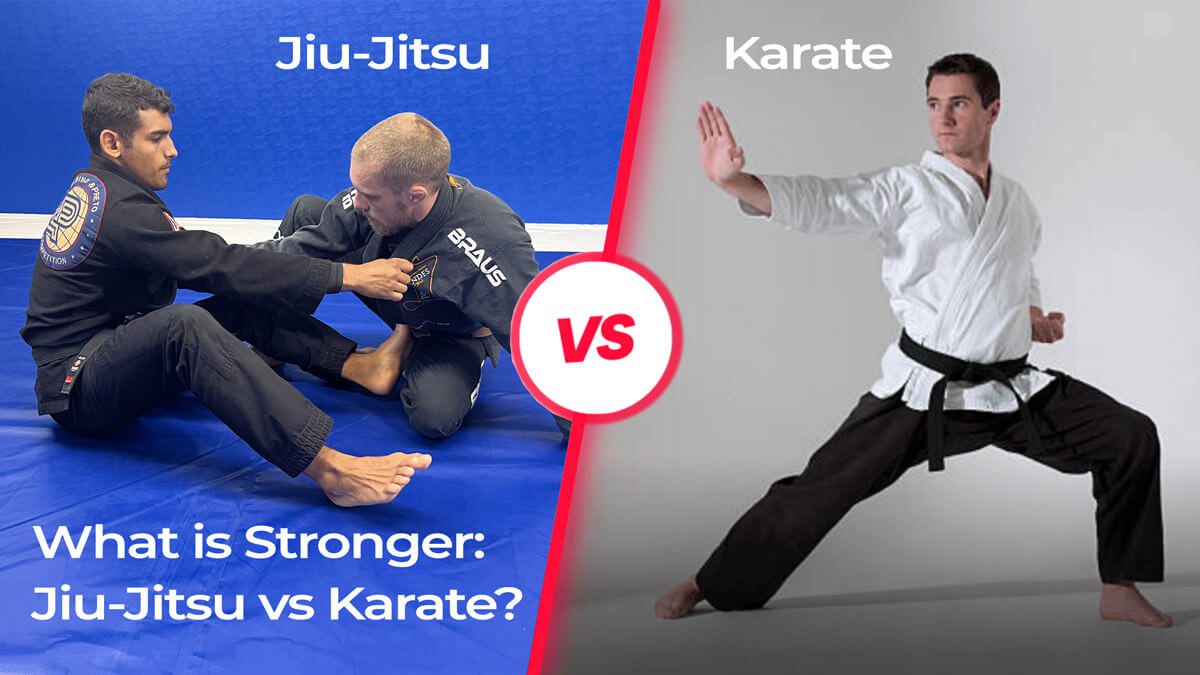
Martial arts practitioners around the world often ask the same question: what is stronger, Jiu-Jitsu or Karate? Both disciplines are respected and have helped millions of people develop discipline, confidence, and self-defense skills. However, when comparing Jiu-Jitsu vs Karate, the difference between grappling and striking becomes very clear.
Understanding how these martial arts function in real situations is important for anyone looking to learn effective self-defense or choose the right training path.
At Athlas Training Team, we believe Brazilian Jiu-Jitsu offers a powerful advantage in real combat scenarios. Many real fights eventually end up on the ground, where grappling knowledge becomes essential.
Jiu-Jitsu teaches practitioners how to control opponents, escape dangerous situations, and apply submissions using leverage instead of strength.
This is one of the main reasons why Brazilian Jiu-Jitsu has become one of the most respected martial arts in the world today.
The Origins of Jiu-Jitsu and Karate
Understanding the origins of each discipline helps explain the differences between Jiu-Jitsu vs Karate.
Jiu-Jitsu: The Gentle Art
Jiu-Jitsu originated in Japan and was later refined in Brazil into what is now known as Brazilian Jiu-Jitsu (BJJ). The art focuses on grappling, positional control, and submission techniques such as chokes and joint locks.
Rather than relying on strength, Jiu-Jitsu uses leverage and technique. This allows smaller practitioners to defend themselves against larger opponents. Through positions like guard, mount, and back control, fighters can dominate opponents and finish fights using submissions.
Because of its effectiveness, Brazilian Jiu-Jitsu has become a fundamental skill for modern combat sports and self-defense training.
Karate: The Art of Striking
Karate was developed in Okinawa, Japan, and focuses primarily on striking techniques. Practitioners train punches, kicks, blocks, and movement designed to deliver powerful attacks while maintaining distance.
Karate emphasizes discipline, speed, and explosive striking ability. Many students practice Karate for competition, personal development, and self-defense.
However, traditional Karate focuses almost entirely on stand-up fighting and does not emphasize grappling or ground control.
This difference becomes very important when comparing Jiu-Jitsu vs Karate in real combat situations.
Jiu-Jitsu vs Karate in Real Fights
One of the biggest differences between Jiu-Jitsu vs Karate is the range of combat.
Karate focuses on stand-up striking. Fighters aim to maintain distance and land punches or kicks with precision and speed.
Jiu-Jitsu, on the other hand, specializes in grappling. Once the distance closes and fighters clinch or fall to the ground, grappling skills become essential.
Many real-world altercations quickly move from striking distance into clinching or wrestling. In these moments, a fighter trained in Brazilian Jiu-Jitsu often has a significant advantage because they understand how to control, sweep, and submit opponents.
The Vale Tudo Era: When Martial Arts Were Tested
The debate over Jiu-Jitsu vs Karate became much more visible during the Vale Tudo era of the 1990s. Fighters from different martial arts backgrounds competed with minimal rules to determine which styles were most effective.
These early competitions eventually led to the creation of modern mixed martial arts events such as the Ultimate Fighting Championship.
One of the most famous examples of Jiu-Jitsu effectiveness was Royce Gracie. Royce Gracie shocked the martial arts world by defeating larger and stronger opponents using Brazilian Jiu-Jitsu techniques.
His victories demonstrated that grappling and submissions could neutralize many traditional striking styles.
These events helped establish Brazilian Jiu-Jitsu as one of the most effective martial arts in modern combat sports.
Jiu-Jitsu vs Karate for Self-Defense
When discussing Jiu-Jitsu vs Karate, self-defense is one of the most important considerations.
Karate offers powerful striking techniques that can be effective when a fighter maintains distance. Punches and kicks can create space and discourage attackers.
However, real situations are often unpredictable. Distance can close quickly, and many confrontations end up involving grabbing, pushing, or wrestling.
Brazilian Jiu-Jitsu prepares practitioners for these moments. Students learn how to defend takedowns, escape dangerous positions, and control opponents using technique rather than brute force.
For this reason, many self-defense experts consider Brazilian Jiu-Jitsu one of the most practical martial arts for real-life situations.
Why MMA Fighters Train Jiu-Jitsu
The rise of mixed martial arts changed how people evaluate martial arts effectiveness.
Early MMA events showed that fighters who only specialized in striking often struggled when facing opponents with strong grappling skills.
Because of this, Brazilian Jiu-Jitsu quickly became a core discipline for professional fighters. Today, most MMA athletes train both striking and grappling, but Jiu-Jitsu remains one of the most important foundations.
The success of Jiu-Jitsu fighters in early MMA competitions helped demonstrate how effective grappling could be in real combat scenarios.
Strengths of Jiu-Jitsu
Brazilian Jiu-Jitsu offers several advantages:
• Control of opponents through positional dominance
• Ability to finish fights using submissions
• Efficient use of leverage instead of strength
• Proven success in MMA and self-defense situations
• Effective training for smaller practitioners
These characteristics make Jiu-Jitsu extremely practical for real-world situations.
Strengths of Karate
Karate also provides important benefits:
• Powerful striking techniques
• Fast footwork and mobility
• Strong distance management
• Explosive knockout potential
• Discipline and traditional training structure
Karate practitioners often excel in stand-up exchanges and can deliver very effective strikes.
So What Is Stronger: Jiu-Jitsu or Karate?
The answer depends on the situation.
In pure striking exchanges, Karate can be extremely effective. However, when the fight moves into grappling or ground fighting, Brazilian Jiu-Jitsu offers a significant advantage.
Because many fights eventually involve clinching or grappling, Brazilian Jiu-Jitsu has become one of the most respected martial arts for real self-defense.
Rather than viewing the arts as enemies, many modern martial artists combine both striking and grappling skills to become more complete fighters.
Train Brazilian Jiu-Jitsu at Athlas Training Team
If you are looking to experience the benefits of Brazilian Jiu-Jitsu training, Athlas Training Team offers professional instruction for beginners and advanced practitioners.
Our academy focuses on technique, strategy, and practical self-defense skills. Students learn how to control opponents, improve physical conditioning, and build confidence through structured martial arts training.
If you are searching for Brazilian Jiu-Jitsu classes near Fort Lauderdale, Athlas Training Team provides a welcoming environment where students of all levels can grow and develop their skills.
FAQ – Jiu-Jitsu vs Karate
Is Jiu-Jitsu stronger than Karate?
Brazilian Jiu-Jitsu is often considered more effective in grappling situations because it focuses on control and submissions rather than striking power.
Is Karate better for striking?
Yes. Karate specializes in powerful punches, kicks, and distance control, making it very effective in stand-up striking exchanges.
Which martial art is better for real fights?
Many experts believe Brazilian Jiu-Jitsu is one of the most practical martial arts for real fights because many altercations eventually involve grappling or ground control.
If you enjoyed learning about Jiu-Jitsu vs Karate, feel free to watch the video and share your opinion in the comments. Martial arts debates are part of the learning process, and every style offers valuable lessons.
At Athlas Training Team, we continue to study, practice, and share martial arts knowledge with our community.
