
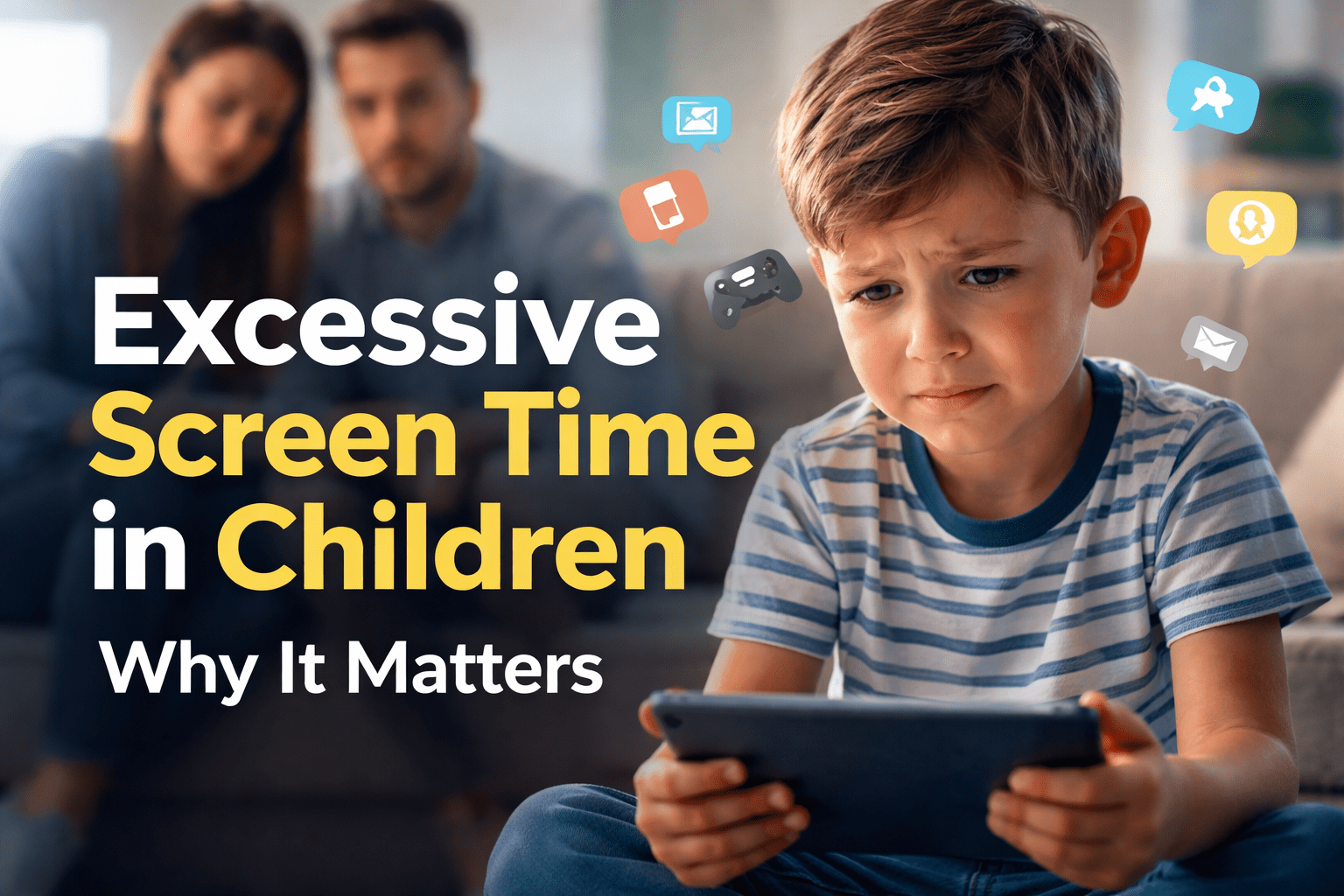
Around the world, parents, educators, and health professionals are witnessing a worrying pattern: children are struggling emotionally at younger and younger ages. Recent studies show that excessive screen time in children is no longer just a developmental concern — it is becoming a mental health issue. In some cases, very young children are experiencing intense emotional breakdowns, anxiety, and behavioral crises that require professional intervention.
This is not about blaming technology. It is about understanding how constant exposure to screens is shaping children’s brains, emotions, and ability to deal with real life.
What Is Happening to Children Today?
A Childhood Surrounded by Screens
Today’s children are growing up in a world where screens are always available. Phones, tablets, TVs, and gaming devices are often introduced early and used frequently — at home, in cars, at restaurants, and sometimes even in school settings. For many families, screens have become a tool to keep children calm, distracted, or occupied.
Over time, however, this constant stimulation replaces essential childhood experiences such as boredom, free play, problem-solving, and social interaction. These moments, although uncomfortable at times, are critical for emotional development.
Emotional Overload at an Early Age
Health professionals are increasingly reporting children who show signs of emotional overload — from intense tantrums and anxiety when screens are removed, to sleep disturbances and difficulty regulating emotions. This pattern isn’t just anecdotal: research shows that high screen exposure in early childhood is associated with poorer emotional regulation and behavioral challenges. For example, one comprehensive review of research on early childhood media use found that young children with high screen use tend to show less curiosity, reduced self-control, and greater emotional instability compared to peers with lower screen exposure. (Children and Screens)
Other studies reveal that screen time in very young children is linked to increased emotional reactivity, aggression, and externalizing behaviors, suggesting that prolonged screen use can interfere with the development of healthy coping skills. (PubMed Central)
Additionally, research published in ScienceDirect shows that excessive screen time is significantly associated with emotional symptoms, conduct problems, and difficulties in peer relationships among children and adolescents. (ScienceDirect)
👉 You can link directly to these studies or summaries in your blog:
- Early Childhood Mental Health and Media Use (Children and Screens) – research on emotional regulation and screen exposure: https://www.childrenandscreens.org/learn-explore/research/early-childhood-mental-health-and-media-use/ (Children and Screens)
- Effects of Excessive Screen Time on Child Development (PMC, NIH) – evidence of behavioral and emotional impacts: https://pmc.ncbi.nlm.nih.gov/articles/PMC10353947/ (PubMed Central)
- Associations Between Screen Time and Emotional/Behavioral Difficulties (ScienceDirect) – links screen time with emotional challenges: https://www.sciencedirect.com/science/article/abs/pii/S0165032725003684(ScienceDirect)
Why Excessive Screen Time Affects Children So Deeply
The Brain and Instant Gratification
Screens are designed to deliver fast rewards. Bright colors, quick movements, sounds, and instant responses stimulate the brain’s reward system continuously. For a developing brain, this creates a strong preference for immediate pleasure and low tolerance for delay.
As a result, everyday situations — waiting, losing, listening, or trying again — feel overwhelming.
A Lack of Real Emotional Practice
In real life, children must deal with frustration, limits, and failure. Screens remove most of these challenges. Games can be restarted. Videos can be skipped. Difficulty can be avoided.
When children spend too much time in this environment, they are not practicing how to manage frustration, disappointment, or effort. This gap becomes visible in their behavior.
What Studies Reveal About Frustration and Behavior
Low Frustration Tolerance
Research on excessive screen time in children shows a clear pattern: children exposed to long periods of screen use often struggle to cope when things do not go their way. Small obstacles can trigger strong emotional reactions because the child has not developed the skills needed to self-regulate.
Difficulty Accepting Limits
Screens give children control. Real life does not. When limits are introduced — whether by parents, teachers, or rules — children may respond with resistance, emotional shutdown, or aggression.
This is not a character flaw. It is a learned response.
How Can We Prevent These Effects?
Physical Activity as a Powerful Tool
Movement Changes Focus
One of the most effective ways to reduce screen dependence is regular physical activity. When children engage in 45 minutes to 1.5 hours of movement, their attention naturally shifts away from screens and toward their own bodies, surroundings, and emotions.
Physical activity helps:
- Regulate the nervous system
- Reduce anxiety and emotional tension
- Improve focus and mood
It creates space for the brain to slow down and reset.
Why Jiu-Jitsu Is Especially Effective
Learning to Face Frustration
Unlike screens, Jiu-Jitsu does not offer instant success. Children must try, fail, adjust, and try again. This process teaches them that frustration is not something to avoid, but something to manage.
Over time, children learn:
- Patience
- Emotional control
- Persistence
These skills directly counter the effects of excessive screen use.
Strategy, Discipline, and Self-Control
Jiu-Jitsu requires children to think, plan, and stay calm under pressure. They learn to respect rules, follow structure, and control their reactions — not just their bodies.
This combination of mental and physical engagement helps children rebuild skills that screens often weaken.
Teaching Skills Screens Cannot Teach
Emotional Strength for Real Life
Screens are passive. Jiu-Jitsu is active. On the mat, children experience real emotions: excitement, frustration, confidence, and challenge. With proper guidance, they learn how to process these emotions in a healthy way.
This prepares them not only for sports, but for life.
Final Thoughts
Excessive screen time in children is a global issue, and its effects are becoming harder to ignore. While technology is part of modern life, children need balance. They need movement, human interaction, discipline, and opportunities to face challenges in the real world.
Physical activity — especially structured disciplines like Jiu-Jitsu — offers children a path back to emotional resilience, focus, and confidence. The goal is not to eliminate screens, but to ensure they do not replace the experiences children need to grow strong, healthy, and emotionally prepared.
