
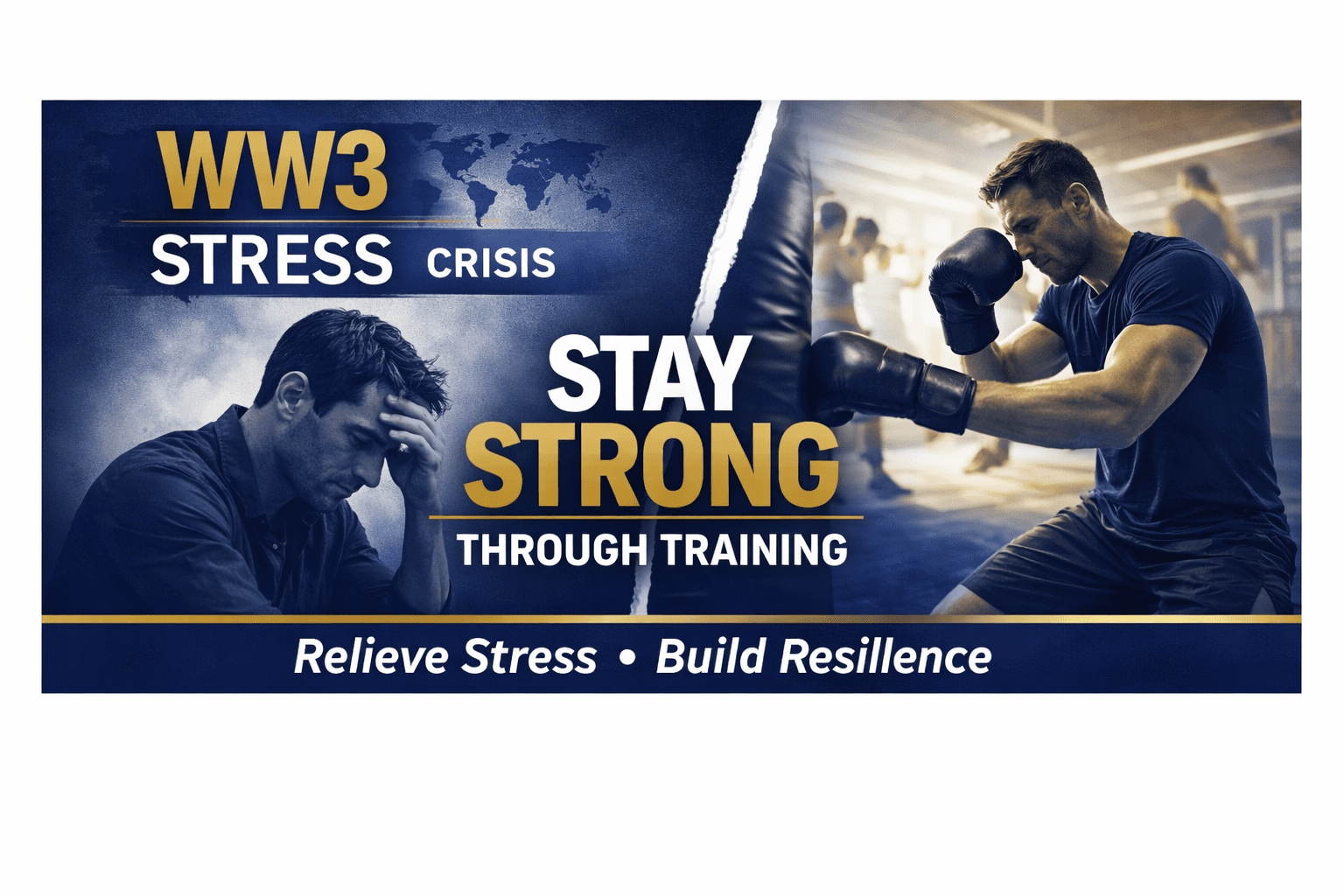
The Rise of World War 3 Stress
Lately, you can feel it everywhere. Conversations have changed, headlines feel heavier, and more people are quietly asking the same question: what’s going to happen next? The idea of a global conflict is no longer something distant or theoretical — it has become part of everyday life.
This is where World War 3 stress begins.
Even here in Fort Lauderdale, far from any battlefield, the impact is real. You wake up, check your phone, and immediately see updates about geopolitical tension. Gas prices go up, groceries feel more expensive, and the future seems a little less predictable than it did before.
On top of that, social media amplifies everything. Opinions, speculation, breaking news — all mixed together, all day long.
Your mind does not filter this as “just information.”
It interprets it as risk.
And when that happens repeatedly, your brain starts to operate in a constant state of alert. Not panic, but pressure. A subtle, ongoing tension that builds over time.
That is the reality of World War 3 stress — not something dramatic, but something continuous.
You Don’t Need to Be in a War to Feel It
One of the biggest misconceptions people have is believing that stress from war only affects those who are directly involved. In reality, that is no longer true. Today, stress is not only physical — it is informational and psychological. You can be thousands of miles away from any conflict and still feel its impact daily.
The reason is simple: we are constantly connected. News reaches you instantly, updates never stop, and information is available 24/7. What used to be occasional exposure has now become continuous. Without realizing it, your brain is processing this flow of information as a series of ongoing threats.
Research supports this clearly. Studies indicate that over 70% of adults report increased stress levels directly linked to global events, and continuous exposure to news has been shown to significantly raise anxiety levels. This happens because your nervous system does not fully distinguish between direct danger and repeated signals of potential danger.
In practical terms, your body reacts the same way it would if you were actually in a high-risk situation. Your heart rate may increase, your thoughts become more alert, and your body stays in a heightened state of readiness. Over time, this constant activation begins to wear you down.
This is when the symptoms start to appear more clearly:
- Persistent anxiety, even without a specific reason
- Irritability and a shorter emotional tolerance
- Mental and physical fatigue
- Difficulty concentrating or staying focused
At first, these signs may seem small or temporary. However, when this state continues for days, weeks, or even months, it becomes something deeper.
It becomes chronic stress.
And chronic stress, if not managed properly, begins to affect not only your mental clarity but also your physical health, your relationships, and your overall quality of life.
What Happens Inside Your Body
When you start feeling stressed, your body doesn’t wait — it reacts right away. Even if you’re just watching the news or scrolling on your phone, your system goes into alert mode.
It releases hormones like cortisol and adrenaline, which are meant to help you deal with danger. Your heart rate increases, your body gets more tense, and your mind becomes more alert. This is what we call the fight-or-flight response.
In the right situation, this is a good thing. It’s there to protect you.
But here is the problem today:
You are not dealing with one stressful moment.
You are dealing with stress all day, every day.
Every headline, every update, every uncertainty keeps triggering that same response. And your body doesn’t get a real chance to reset.
Instead of turning on and off, it stays on.
And when that happens, you start to feel it:
- You get more irritated over small things
- You feel tired, even when you didn’t do much
- Your focus drops
- Your patience becomes shorter
At first, it seems normal. Just a “busy day” or “a lot going on.”
But over time, it adds up.
Your body was not designed to stay in this constant state of pressure. And when it does, it begins to affect your health in a deeper way — your energy, your mood, even your immune system.
That’s why it’s important to have a way to release that stress. Not ignore it. Not push it aside.
Actually release it.
The Proven Solution: Physical Activity
At this point, the question becomes simple: what can you actually do to deal with all of this?
This is where physical activity stands out — not as a trend, but as something consistently supported by science and real-world results.
When you move your body, something shifts almost immediately. It’s not just about “burning calories.” Your body starts to release endorphins, which naturally improve your mood and create a sense of relief. At the same time, levels of cortisol — the stress hormone — begin to go down.
In other words, your body starts to calm itself.
Organizations like the Mayo Clinic highlight this clearly: exercise helps regulate your system, improve your mood, and even break the mental loop of overthinking. That constant cycle of negative thoughts slows down when your focus shifts to movement.
And it goes beyond that.
Studies in mental health consistently show that people who stay active experience:
- Less anxiety throughout the day
- Better sleep at night
- More stable mood and emotional control
- Higher levels of confidence and self-esteem
One of the most impactful findings comes from a large-scale study with over 1.2 million people, which showed that individuals who exercise regularly report more than 40% fewer days of poor mental health.
That is not a small difference. That is a major shift in quality of life.
What this means in practical terms is simple:
You cannot control what is happening in the world.
But you can control how your body responds to it.
And movement is one of the most effective ways to do that.
Why Martial Arts Release More Stress Than Traditional Gym Workouts
Not all exercise is equal.
Traditional gym training:
- Repetitive
- Often passive mentally
- Limited emotional engagement
Martial arts training (Jiu-Jitsu, Muay Thai, Boxing):
- Requires focus and reaction
- Forces presence in the moment
- Includes controlled pressure and resistance
- Builds emotional discipline
Scientific Perspective
Studies show that:
- Exercise increases BDNF and serotonin, improving stress resilience
- Higher engagement activities produce stronger mental benefits
Additionally:
- Training 3–5 times per week provides optimal mental health improvement
👉 This is why martial arts often deliver stronger stress relief than basic workouts.
Training as a Family: A Real Solution at Athlas Training Team
At Athlas Training Team, we understand that stress today affects everyone — adults, teenagers, and even children. That is why we offer structured martial arts programs for the entire family, creating an environment where everyone can grow together, both physically and mentally.
Training in disciplines such as Muay Thai, Boxing, and Brazilian Jiu-Jitsu goes far beyond learning techniques. These practices help release accumulated stress in a natural and effective way. The intensity of the training allows you to disconnect from daily pressure, while the structure and discipline help bring your mind back to balance.
Each class provides a different type of benefit. Muay Thai and Boxing allow for a strong physical release, helping reduce tension and improve energy levels. Brazilian Jiu-Jitsu, on the other hand, challenges your mind, teaching you how to stay calm under pressure and make decisions even in uncomfortable situations.
When families train together, the impact becomes even stronger. It creates shared goals, strengthens relationships, and builds a support system that extends beyond the mats. In a world filled with uncertainty, having this kind of structure and connection is essential.
At Athlas, training is not just about learning how to fight.
It is about learning how to handle stress, build resilience, and stay strong — together.
Training Builds Mental Resilience — Not Just Fitness
Today, with so much uncertainty in the world, training is no longer just about looking better or staying in shape. Of course, physical results are important, but the real value goes much deeper than that.
The goal is not only to feel better for a moment.
It is to become stronger mentally, more stable, and more prepared for whatever comes your way.
When you train consistently, especially in martial arts, you start to notice changes that go beyond the physical. You become more disciplined, because showing up — even on the days you don’t feel like it — becomes part of your routine. You begin to develop emotional control, learning how to stay composed instead of reacting impulsively.
Over time, you also build confidence. Not the kind that comes from words, but the kind that comes from experience — from facing challenges, being uncomfortable, and still pushing through. You learn how to handle pressure, how to think clearly in difficult situations, and how to stay calm when things don’t go as planned.
And this is where training becomes different.
These are not just benefits you feel during class.
They follow you into your daily life.
You handle stress better.
You react differently to problems.
You become more patient, more focused, and more in control.
In the end, training is not just building your body.
It is shaping how you think, how you respond, and how you live.
Final Thoughts
World War 3 stress is not just something people talk about online — it is something many are actually feeling in their daily lives. It slowly affects your thoughts, your emotions, and even how your body reacts throughout the day. You may not always notice it right away, but over time it builds up, influencing your mood, your energy, and your ability to stay focused and balanced.
Ignoring this kind of stress does not make it go away. In fact, when it is left unmanaged, it can grow into something more serious, affecting both your mental and physical health in the long run.
The good news is that there is a clear and effective way to deal with it.
Training — especially through martial arts — offers a powerful outlet. It allows you to release tension, clear your mind, and regain control over your emotions. At the same time, it strengthens your body, improves your focus, and helps you develop a sense of stability, even when everything around you feels uncertain.
At Athlas Training Team, we see this every day. Training is not just about learning techniques or improving physically. It is about building resilience, creating discipline, and preparing yourself to handle real-life challenges with confidence.
In a world that can feel unpredictable, becoming stronger — both mentally and physically — is not just an advantage.
It is essential.
